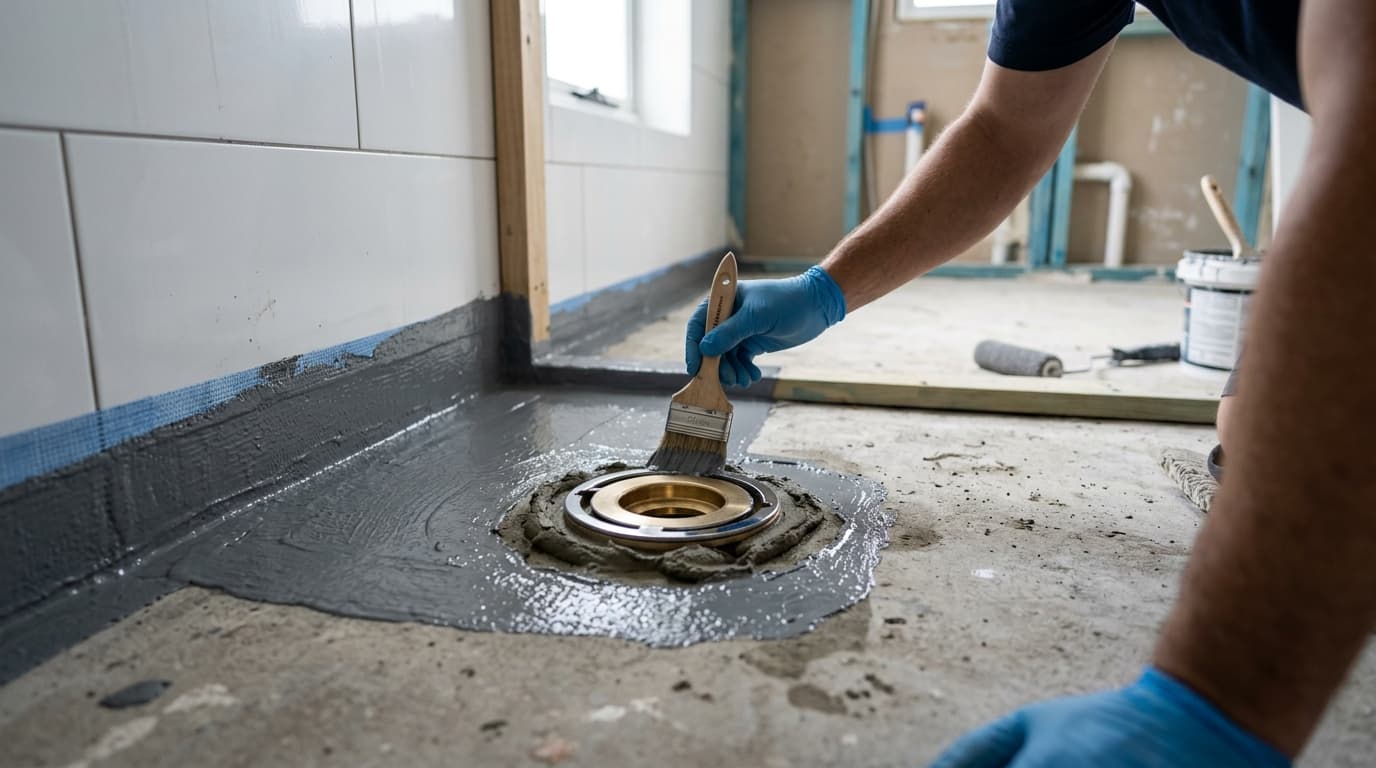
An in-depth technical breakdown of AS 3740:2021 requirements for bathroom wet areas in NSW. Learn membrane classes, puddle flange detailing, bond breaker rules, and mandatory compliance certificates.
Understanding AS 3740: Waterproofing of Domestic Wet Areas
Waterproofing failures represent over 80% of all building defect complaints lodged with NSW Fair Trading, despite accounting for less than 2% of total construction costs. In residential bathrooms, water ingress into timber subfloors, wall framing, and adjacent bedrooms can easily cause structural damage exceeding $15,000 to rectify.
The Australian Standard AS 3740:2021 (Waterproofing of Domestic Wet Areas) sets the mandatory technical benchmark for design, material selection, and application of internal waterproof barrier systems under the National Construction Code (NCC) Volume Two.
Key Wet Area Classifications under AS 3740
AS 3740 categorises bathroom surfaces into distinct zones based on the frequency and severity of water exposure:
- Shower Enclosure (Enclosed): The entire shower floor plus walls up to a minimum of 1800mm above the finished floor level, or 150mm above the shower rose connection (whichever is higher).
- Unenclosed Showers / Walk-in Wet Rooms: The waterproof membrane must extend across the entire bathroom floor plus a minimum horizontal radius of 1500mm from the shower head position.
- Bath & Spa Perimeters: Walls adjacent to vessel baths must be waterproofed to a minimum of 150mm above the bath lip, incorporating continuous vertical corner bond breakers.
- Vanity & Basin Splashbacks: Minimum 150mm above the basin rim or vanity countertop surface.
The 3 Membrane Classes: Which One Is Required?
Membranes certified under AS/NZS 4858 are divided into three elongation classes:
- Class 1 (Low Extensibility < 50% elongation): Traditional rigid cementitious slurries, typically reserved for masonry tanking rather than dynamic timber floor joists.
- Class 2 (Medium Extensibility 50% – 300% elongation): Modified acrylic water-based membranes suitable for stable concrete slabs with minimal structural deflection.
- Class 3 (High Extensibility > 300% elongation): Liquid polyurethane elastomeric membranes. (Recommended by JB Waterproofing for all modern renovations with timber framed subfloors or suspended concrete decks).
JB Technical Rule: Never apply tiles directly over a single membrane coat. AS 3740 mandates a minimum dry film thickness (DFT) — typically 1.0mm to 1.2mm across two cross-rolled coats — to guarantee pinhole-free hydrostatic resistance.
Critical Detail 1: Puddle Flanges & Leak Waste Integration
One of the most common shortcuts by non-licensed operators is omitting the puddle flange (sub-tile leak drain). In a compliant bathroom system:
- The puddle flange must be recessed flush with the floor substrate.
- The liquid membrane is turned down into the internal throat of the puddle flange.
- Any water that penetrates porous grout lines percolates through the screed and escapes directly down into the waste pipe rather than pooling underneath adjacent tiles.
Critical Detail 2: Bond Breakers & Perimeter Upstands
Every internal 90-degree junction (wall-to-floor and wall-to-wall corners) is subject to building movement. Without an engineered bond breaker, the membrane bridges the rigid corner and tears under shear stress. AS 3740 mandates a Class 3 bond breaker tape or neutral-cure polyurethane sealant fillet capable of 200% movement before applying membrane coats.
NSW Compliance Certificates & Warranties
In New South Wales, residential waterproofing work valued over $5,000 must be executed by a contractor holding an active NSW Fair Trading Waterproofing Licence. Upon job completion, JB Waterproofing Solutions issues an official Form 15 / Certificate of Compliance stating compliance with AS 3740:2021, backed by up to a 10-year written warranty.