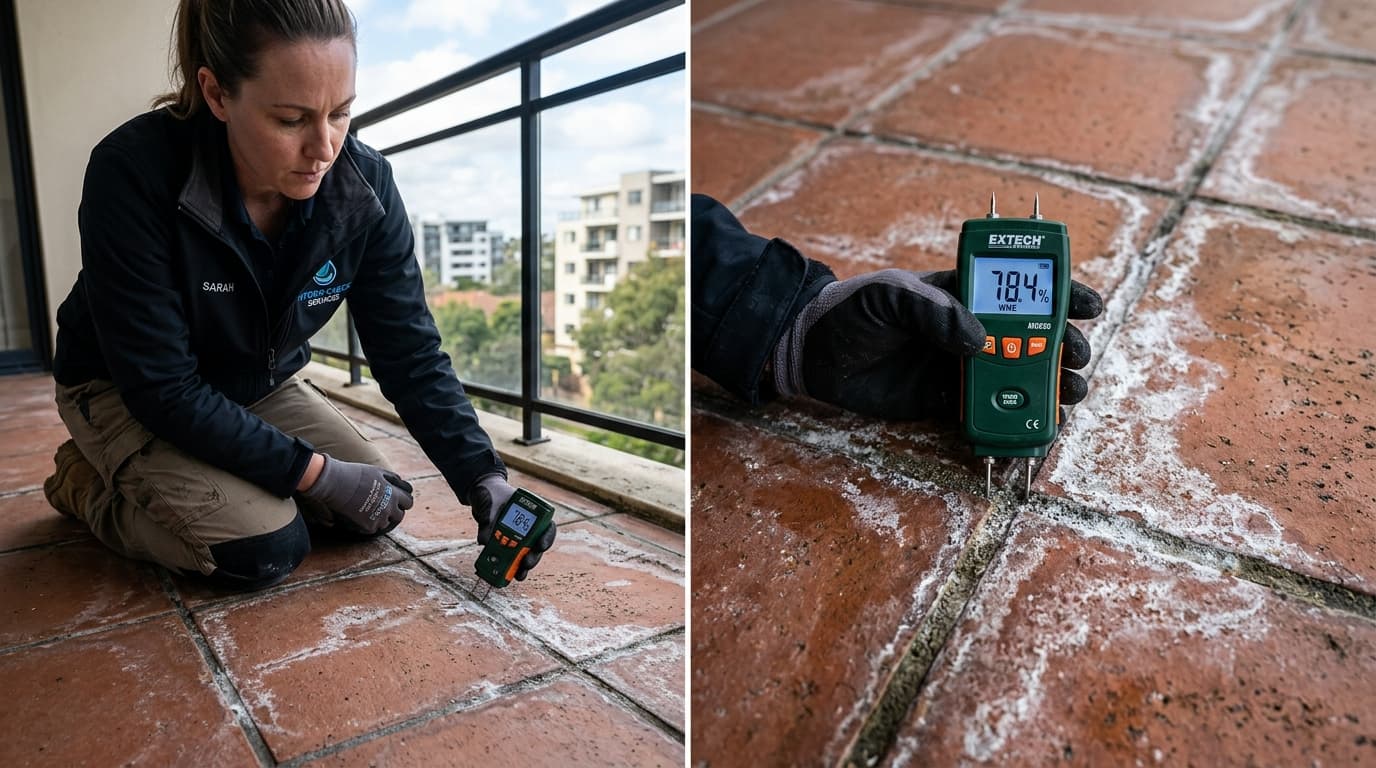
Understand the chemical mechanism behind white powdery calcium salts on tiles and grout. Learn why acid washing fails and how proper sub-tile drainage stops efflorescence forever.
What is Efflorescence and Why Does It Keep Coming Back?
Have you noticed unsightly white powdery crusts, calcified crystals, or chalky deposits emerging along your balcony or bathroom grout lines? This phenomenon is known as efflorescence, and it is the single clearest visual warning sign that water is trapped beneath your tile bed.
The Chemical Reaction Behind the White Stains
Efflorescence is not mould; it is mineral salt. The process occurs in three stages:
- Water Ingress: Rainwater or shower water penetrates porous grout joints and saturates the underlying cement screed.
- Mineral Dissolution: Free lime (calcium hydroxide, Ca(OH)₂) naturally present in the unsealed cement screed dissolves into the trapped water.
- Capillary Action & Evaporation: As the sun heats the tiles, moisture is drawn upward through capillary action. When the water evaporates at the tile surface, calcium hydroxide reacts with carbon dioxide in the air to form hard, insoluble calcium carbonate (CaCO₃).
Chemical Mechanism:
Ca(OH)₂ (in wet screed) + CO₂ (atmospheric air) ➔ CaCO₃ (hard white salt crystals) + H₂O
Why Acid Washing Is Only a Temporary Cosmetic Fix
Many property owners attempt to scrub efflorescence away using hydrochloric acid or store-bought cleaners. While acid momentarily dissolves surface crystals, it actually creates microscopic channels in the grout and accelerates water ingress, ensuring the efflorescence returns within weeks — often worse than before.
The 3-Step Permanent Remediation Solution
To eliminate efflorescence permanently, you must eliminate the moisture trap beneath the tiles:
- 1. Sub-Surface Drainage Matting (Dimple Cell): Installing an uncoupling drainage membrane between the waterproof barrier and the screed allows water to flow unimpeded directly into drainage outlets before it can dissolve cement minerals.
- 2. Polymer-Modified Hydrophobic Screeds & Grouts: Utilizing low-efflorescence epoxy grouts and polymer-modified screed additives prevents free lime leaching.
- 3. Correct Fall Ratios (1:80 Minimum): Ensuring water rapidly sheds off the deck rather than ponding and percolating into grout pores.
Need Expert Help? If your Sydney balcony or courtyard is suffering from persistent efflorescence, book a moisture diagnostic inspection with JB Waterproofing Solutions to pinpoint the moisture source.