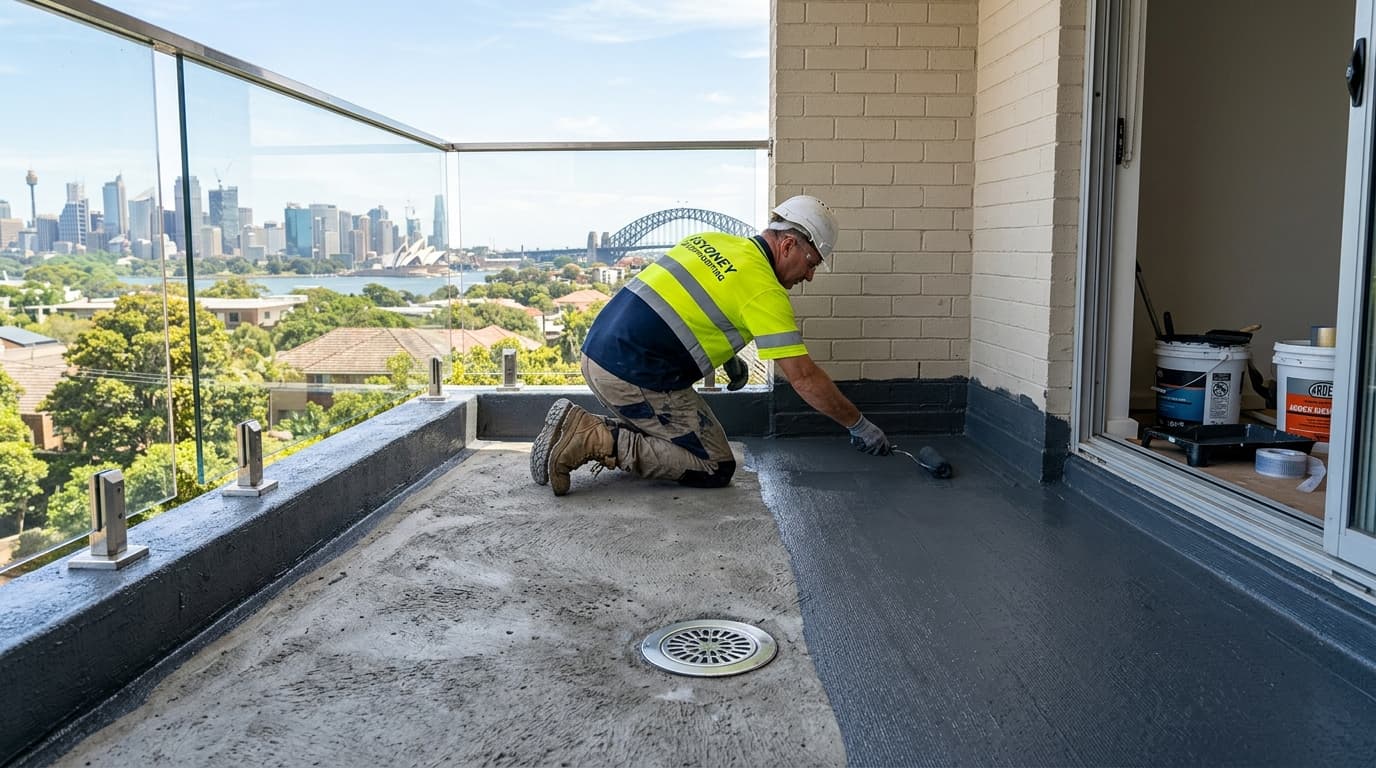
Discover why outdoor balconies fail in Sydney's coastal climate. Detailed guide on AS 4654.2 compliance, fall ratios (1:80), hob detailing, cantilevered slab expansion, and sub-screed drainage.
The Vulnerability of Sydney Outdoor Balconies
Sydney's climate subjects outdoor balconies to extreme thermal cycles — blistering 40°C UV heatwaves in summer followed by torrential subtropical rainstorms. When concrete slabs expand and contract, subpar waterproofing membranes crack, allowing water to infiltrate the building envelope.
The Australian Standard AS 4654.2 (Waterproofing Membranes for External Above-Ground Use - Design and Installation) governs exterior deck and balcony waterproofing to prevent concrete cancer, internal ceiling leaks, and balustrade structural degradation.
The Anatomy of a Typical Balcony Waterproofing Failure
Why do so many brand-new apartment balconies and residential decks begin leaking within 2 to 5 years? Our diagnostic inspections reveal three consistent root causes:
- Insufficient Fall to Waste (Ponding Water): AS 4654.2 specifies a mandatory minimum slope of 1:100 (ideally 1:80) toward drainage points. Flat slabs allow standing water to break down chemical bonds in topical coatings.
- Missing or Inadequate Sub-Screed Membrane: Applying membrane solely on top of the sand-cement screed leaves the screed vulnerable to waterlogging if tiles crack. Premium installations require dual-layer protection.
- Inadequate Door Threshold & Upstand Flashing: Rain driven by high winds easily crests door sills if vertical membrane upstands are less than 100mm (or 150mm in high wind zones) above the finished tile level.
Essential AS 4654.2 Detailing Requirements
To ensure a balcony withstands decades of coastal rain and UV exposure, every installation must incorporate:
- Drip Edge Profiles: Stainless steel or heavy-duty aluminium angle trim along cantilevered edges to prevent water tracking backward onto soffits.
- Expansion Joints at 4-Metre Intervals: Flexible polyurethane joint seals placed directly through tile and screed layers to accommodate slab movement.
- Hob Terminations: Solid masonry or polyurethane hobs forming an impermeable bathtub tray around the perimeter before door frames are installed.
Professional Insight: Spray-on clear grout sealers cannot repair an active balcony leak. They only repel surface droplets for a few weeks while water continues accumulating underneath the tile bed, accelerating steel reinforcement corrosion (concrete cancer).
Diagnostic Inspection & Non-Invasive Rectification
JB Waterproofing Solutions uses non-invasive electronic moisture scanners and thermal imaging cameras to map subsurface water migration paths on residential balconies across Sydney. Contact our licensed team to arrange a full diagnostic assessment before minor leaks turn into structural remediation costs.